|
|
|
CD photo ⰱ2 all rights reserved. Official CD Release Party on Friday, August 10 at Buddy Guy's Legends!
Come on down and get your own autographed copy of Old School Rockin'!!
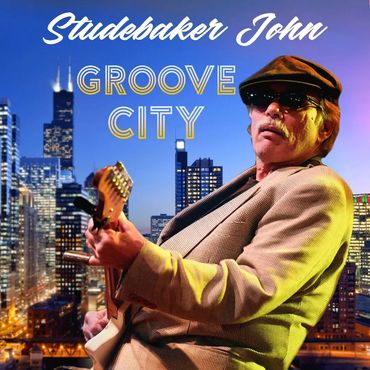
Studebaker John's Old School Rockin' y last CD, Maxwell Street Kings, I wanted to capture the raw, less-is-more sound that I first heard on Chicago͡xwell St. My new CD, Old School Rockinੳ rockin⬵es that helps people to forget their troubles. I場ried to incorporate the raw blues sound into songs that strive to be more contemporary and without musical boundaries. It෨at that sound turned into in the late ೠand early ೬ when the raw blues heavily influenced many contemporary artists, and changed the course of popular music. Old School Rockin鳠for all the people, from the rocking blues crowd to the purists, and from the young folks just getting into it to those who堢een listening all along.Ⓘ
~Studebaker John
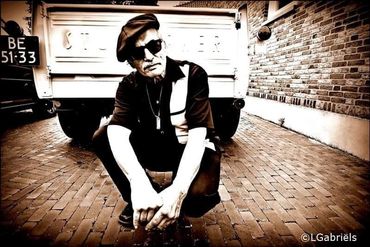
Studebaker John was born in Chicago in 1952, and has lived his whole life there. An avid music fan as a youngster, he learned to play several instruments, including first the harmonica, then the drums, and in his late teens, the guitar. He came of age in the ೬ so was part of the rock ⠲oll/rock generation. It was a time when musical boundaries and barriers were being broken down, and elements of different styles were combined into something new and vibrant that filled the airwaves of AM radio. John liked a lot of different music, but as a young teenager hecasionally hear songs that especially captured his attention and imagination. 䠴he time, I had no idea that this music was called blues, but listening to the radio, youਥar Jimmy Reed, Freddy King, Slim Harpo, and things like that, all mixed in with other music I listened to.`few years later, that included the music of the Yardbirds, the Rolling Stones, and Peter Green's Fleetwood Mac in England, and in the USA, Bob Dylan, Paul Butterfield, Mike Bloomfield, Johnny Winter, the Allman Brothers, ZZ Top, and countless others, all of whom took their inspiration from Chicago६ectric blues, and added a hard rocking edge to it.
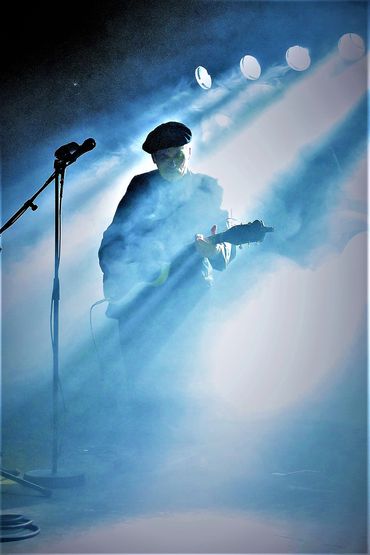
Also during the ೬ John was traveling the city; working in his familyబumbing business, which sometimes took him to the Maxwell Street open air market, where he heard street musicians playing a raw electrified blues for tips. ৯t to see Big John Wrencher, the one-armed harp player who was a Maxwell Street regular and played with just a guitarist and drummer. I was spellbound. His music was simple yet so powerful.Ԩe music he heard on Maxwell Street drew him in, and he started hanging out at clubs on the South and West Side to catch live acts. One memorable night he saw a performance by Hound Dog Taylor that resulted in a personal epiphany: ਡd to play slide guitar.꼐>Over the next couple of decades, John played every chance he got, sometimes sitting in with the cream of Chicago blues players, such as Big Walter, Jimmy Johnson, Buddy and Phil Guy, James Cotton, Jr. Wells and Hound Dog Taylor. He built a reputation as a performer with an exciting, propulsive guitar style, and also developed into a fine blues harpist and vocalist. He became a sought-after sideman and session musician. For example, when the remnants of The Yardbirds and the Pretty Things came to Chicago in the early ೠlooking to make a blues album, they tapped John to provide guitar and harp backing. Shortly thereafter, he was asked to join the reformed Yardbirds, an offer John tuned down in order to record his own music. He realized that he wanted to stop playing cover versions of othersic, and to develop his own voice as a songwriter. ⩴ing songs is the most satisfying part of my job. I write a song to make myself feel better, and I hope it makes others feel better, too.өnce then he has put out more than a dozen albums of all original music, recording on the Blind Pig, Evidence, and his own Avanti labels. It is fitting that Studebaker John is now with Delmark, the oldest existing Chicago-based blues label. He is a Chicago blues original, who plays from the heart and always takes his own distinctive approach to contemporary blues.
y last CD, Maxwell Street Kings, I wanted to capture the raw, less-is-more sound that I first heard on Chicago͡xwell St. My new CD, Old School Rockinੳ rockin⬵es that helps people to forget their troubles. I場ried to incorporate the raw blues sound into songs that strive to be more contemporary and without musical boundaries. It෨at that sound turned into in the late ೠand early ೬ when the raw blues heavily influenced many contemporary artists, and changed the course of popular music. Old School Rockin鳠for all the people, from the rocking blues crowd to the purists, and from the young folks just getting into it to those who堢een listening all along.꼐>Old School Rockinಥsents Studebaker John at the top of his game on 14 original compositions, and is a satisfying listen from beginning to end. Recorded with a minimum of overdubs and a 鶥-in-the studio楥l, itഡut and driving. Highlights include the Latin groove of 峭erized;䨥 swampy, gut-bucket rhythms of ĩsease Called Love;䨥 wages of sin rocker, 鲥 Down Below;穴h its very fine harmonica break; the hill-countrified 孢lin䯷n The Road;ᮤ the live show favorites, in说,㓨e Got It Right (Dress So Tight),ᮤ 鮥 Little Machine.꼂R>~Michael Dixon
Dixon is the former Director of Blues and Roots Music for WRBC, Bates College, and a contributor to blues guides and publications.
Available at studebakerjohn.com
Webmaster: Email |